

The digital transformation of the vending industry continues to accelerate, confirming a direction that is now clear across the entire value chain. Vending machines are no longer simply points of sale; they are becoming connected assets capable of generating data, communicating with payment systems, management platforms and telemetry services.
According to the latest edition of Berg Insight's Connected Vending Machines report, the global installed base of connected vending machines reached 8.1 million units in 2025, accounting for more than half of the approximately 14 million machines installed worldwide. The market is expected to grow at a compound annual growth rate (CAGR) of 7.6%, reaching almost 11.7 million connected machines by 2030, with an estimated penetration rate of 77.5%.
Beyond cashless: connectivity is reshaping vending operations
These figures reflect a structural transformation across the industry. While the continued adoption of cashless payments remains the main growth driver, fuelled by consumers increasingly using cards, smartphones and digital wallets for everyday purchases, the real evolution goes far beyond the payment itself.
Connectivity enables operators to collect real-time data, monitor stock levels remotely, manage technical interventions, deploy software updates and integrate machines with increasingly sophisticated management platforms. As a result, vending operations become smarter, more efficient and more responsive.
A market expanding worldwide
The geographical distribution of connected vending machines highlights the global scale of this transformation.
Markets outside Europe and North America account for the largest share, with approximately 3.3 million connected machines, driven primarily by China and Japan. North America follows with around 2.6 million units, while Europe has approximately 2.2 million connected machines.
These figures are particularly significant for Europe, where vending has a long-established industrial tradition and where Italy continues to play a leading role in terms of installed machines, manufacturing expertise and technological innovation.
Connectivity becomes a competitive advantage
For operators, connectivity is no longer an optional feature—it has become a strategic competitive advantage.
Connected machines provide real-time visibility into machine performance, enable more efficient route planning and replenishment, reduce unnecessary service visits, speed up maintenance and allow product assortments to be tailored more closely to actual consumer demand.
At the same time, connectivity enables manufacturers, payment providers, software developers and operators to work within increasingly integrated digital ecosystems.
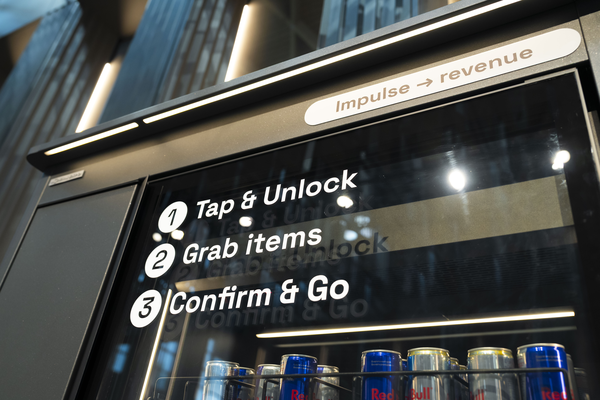
This is where much of the industry's future development will take place. The growth of digital payments, the wider adoption of telemetry, and the emergence of smart screens, digital signage, micro markets and grab-and-go solutions are expanding the traditional role of vending. The vending machine is evolving into a retail interface, a customer touchpoint and a communication channel capable of combining customer experience, operational efficiency and intelligent data management.

Interoperability will be the next major challenge
For the European market, interoperability will become an increasingly critical issue.
Payment systems, cloud platforms, management software and vending machines will need to communicate seamlessly, securely and efficiently. In this context, common technology standards, network upgrades, data integration and robust digital platforms will be essential to support further growth while reducing operational complexity.
The growth of connected vending is not driven by a single technology but by the entire value chain, including machine manufacturers, operators, payment providers, software companies, component suppliers, digital service providers and automated retail solution specialists.
As one of the leading international trade shows for the vending industry, Venditalia brings together these stakeholders to exchange expertise, showcase innovation and create new business opportunities. More than simply presenting new technologies, the exhibition enables professionals to assess their real-world impact on operational efficiency, data management, new service models, customer experience and international competitiveness.
Over the coming years, the vending industry will become increasingly connected, measurable and data-driven.
The ability to transform connectivity into operational value will be one of the defining factors for companies looking to strengthen their competitiveness in international markets.
Subscribe to our the newsletter to stay updated with the latest news from Venditalia: SUBSCRIBE HERE
Leggi la versione italiana QUI
PUBLICATION
07/07/2026
Vending trends
Other related news

18/03/2026
Venditalia 2026: the vending industry’s journey towards a sustainable future

28/04/2025
Venditalia 2026: a new international vision for the vending industry in Rimini

24/08/2026
Functional drinks are changing the vending industry

20/10/2025
Functional coffee: a global trend in the vending industry

03/03/2026
Vending and the workplace: coworking as an increasingly attractive market

15/12/2025
Cybersecurity: a strategic priority for digital vending

19/11/2025
Design in vending: aesthetics and innovation shaping the break of the future

08/10/2025
Vending and fuel stations: new opportunities in the electric mobility era

23/09/2025
The Halal marketing is growing and opening new opportunities for vending global growth of the Halal industry

28/11/2025
Vending & Hospitality: a key opportunity for hotels, B&Bs and campsites

11/12/2025
Venditalia Voices: inside Vending with Lavazza
07/01/2026
Venditalia Voices: trends and outlook of coffee vending with Covim
19/01/2026
Venditalia Voices: how N-and applies Contextual AI to the vending industry
04/02/2026
Venditalia Voices: boosting vending efficiency with Bianchi Industry
16/02/2026
Venditalia Voices: the RiVending model for circular economy
09/03/2026
Venditalia Voices: Hydra Technology & Innovation revolutionizes water filtration